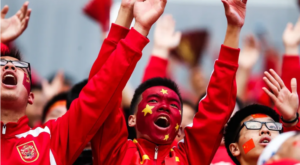
The 2026 FIFA World Cup has produced one of the most striking paradoxes in modern sports. As millions of fans enjoy the tournament across the United States, Canada, and Mexico, China is once again absent from the list of qualified national teams. Yet beyond the pitch, the Asian giant has become one of the tournament’s most influential players.
With investments reportedly exceeding $500 million, Chinese companies are deeply involved in the World Cup’s sponsorship, technology, and operational infrastructure. The nation that failed to earn a place on the field has instead become one of the biggest winners in football’s global business.
Another World Cup Dream Comes to an End
China entered the qualification campaign with what many considered its best opportunity in decades. FIFA’s expansion of the tournament to 48 teams granted Asia 8.5 qualification spots, significantly increasing the continent’s chances of sending more nations to the finals.
Even so, China fell short once again.
A 1-0 defeat to Indonesia in June 2025 ended the country’s qualification hopes, marking another painful chapter in its long pursuit of becoming a football powerhouse.
The disappointment is particularly striking considering that China is home to approximately 289 million football fans, making it one of the world’s largest football audiences.
A Global Power Behind the Tournament
Although China’s national team is missing from the competition, its influence can be found throughout the World Cup.
Lenovo, one of FIFA’s top-tier partners, provides laptops, servers, artificial intelligence infrastructure, and digital solutions supporting the tournament. Among its innovations is Football AI Pro, a generative AI platform developed to assist all 48 participating national teams.
Meanwhile, Hisense serves as both an official sponsor and the provider of key video assistant referee (VAR) technologies used during matches. Chinese dairy giant Mengniu also maintains a significant commercial presence throughout the competition.
The message is unmistakable: while China is not competing on the field, it plays a vital role in making the tournament possible.
The Referee Who Became a National Icon
Without a national team to support, millions of Chinese football fans have embraced an unexpected symbol of national pride: referee Ma Ning.
Known internationally for his firm officiating style, the 46-year-old official has become one of China’s most recognizable figures during the World Cup.
His appointment generated enormous attention across Chinese social media, with millions of online interactions celebrating his participation. Within weeks of documenting his World Cup journey on social platforms, he attracted hundreds of thousands of followers and reportedly secured endorsement deals with major Chinese brands.
For many observers, the fact that a referee has become China’s most celebrated football representative at the World Cup speaks volumes about the country’s current football reality.
Heavy Investment, Limited Sporting Success
For more than a decade, the Chinese government has invested heavily in transforming the country into a global football power.
Thousands of football fields have been built, millions of schoolchildren have been introduced to the sport, and enormous financial resources have been devoted to developing professional football.
Yet the results have fallen well short of expectations.
Analysts point to several structural problems, including an overly centralized development model, insufficient grassroots programs, the collapse of property-backed professional clubs during China’s real estate crisis, and corruption scandals that damaged public confidence in the sport.
Another major challenge is what many call the “academic cliff”—the point during adolescence when increasing academic pressure leads many promising young players to abandon football in favor of education.
Hope Emerging from the Grassroots
Despite years of disappointment, signs of a different future are beginning to emerge.
In Jiangsu Province, a grassroots movement known as “Suchao” has captured national attention. The league features teachers, students, software engineers, delivery workers, and other amateur players competing before enthusiastic crowds.
Unlike previous government-led initiatives, Suchao has grown organically through local communities, offering what many believe could become a more sustainable foundation for Chinese football.
The Real Lesson of the 2026 World Cup
The 2026 FIFA World Cup presents a powerful contrast.
China has the financial strength to sponsor football’s biggest event, provide cutting-edge artificial intelligence, supply essential tournament technology, and produce one of the competition’s most recognized referees.
What it still cannot do is send a national team to compete.
Closing that gap will require far more than financial investment. It will demand long-term institutional reform, stronger youth development, healthier professional clubs, and a football culture that nurtures creativity and talent from the grassroots level.
Until then, China may continue to dominate the business of football—but its greatest challenge remains earning a place where it matters most: on the World Cup stage itself.