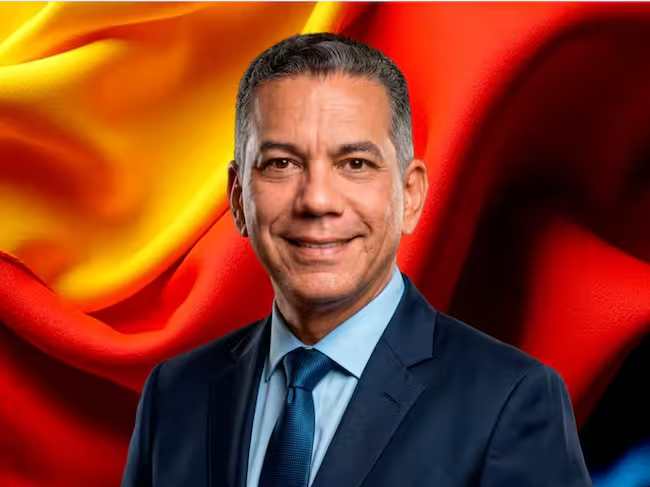
Colombia has just met the man who will lead its Ministry of Defense starting August 7, 2026: retired Major General Jorge Eduardo Mora López, appointed by president-elect Abelardo de la Espriella. Thirty-six years of military service, former commander of the Special Forces Division, former director of Intelligence and Counterintelligence of the
Armed Forces, recipient of the Cross of Boyacá. But behind the announcement lies a story the country should study carefully, because it is not only about him: it is about how our system of public reputation works—and how it fails.
For years, General Mora’s name was linked to allegations of irregularities in the handling of travel allowances within the Special Forces Division. The case reached the courts. And there, where evidence is required rather than rumor, the 44th Criminal Circuit Court of Bogotá confirmed his innocence. According to his legal defense, the case file established something even more serious than the mere absence of responsibility: that the officer’s name, rank, and authority had been improperly used to simulate instructions he never gave. More still: it was the general himself who detected the irregularities and reported them to the institution, providing decisive elements to clarify the facts.
In other words: the man who was accused was, according to what the proceedings established, the man who blew the whistle. Here lies the deeper problem. Years pass between accusation and verdict. In that interval, the presumption of innocence—a constitutional right, not a courtesy— evaporates from public conversation. The accusatory headline runs on the front page; the acquittal, if published at all, appears in a corner. The search engine, which does not distinguish between an accusation and a ruling, keeps serving the old version for years.
A media conviction needs no prosecutor, no judge, no evidence: a click is enough. This is not about shielding the powerful from scrutiny. Investigative journalism is indispensable in a democracy, and public officials—General Mora included, now more than ever as minister—must be held accountable. There is no doubt about that. This is
about something different: ensuring that evidence-free accusations carry consequences when they destroy what a court ruling later restores on paper, but almost never in reality.
Because reputation is not restored by a verdict. It is restored—if at all—with the same volume, visibility, and persistence with which it was attacked. And in Colombia, that almost never happens. General Mora arrives at the ministry with a ruling that vindicates him. Thousands of anonymous Colombians, acquitted in silence after being condemned at full volume, have no such platform. For them, more than for him, this debate is urgent.